What Is Self-Tempering in TMT Steel? Why Is It Important?
A steel bar used in construction needs to do more than simply withstand weight. It should also handle stress and deformation without becoming brittle. Achieving the right balance between these properties is an important part of steel manufacturing.
This is where TMT (Thermo-Mechanically Treated) steel bars make a difference. They undergo a controlled heat-treatment process that changes their internal structure and mechanical properties.
One important stage in this process is self-tempering. The concept is simple: the heat retained inside the steel itself helps improve the properties of its outer layer.
Let’s look at how this process works and why it matters when choosing reinforcement steel.
Understanding the Self-Tempering Process
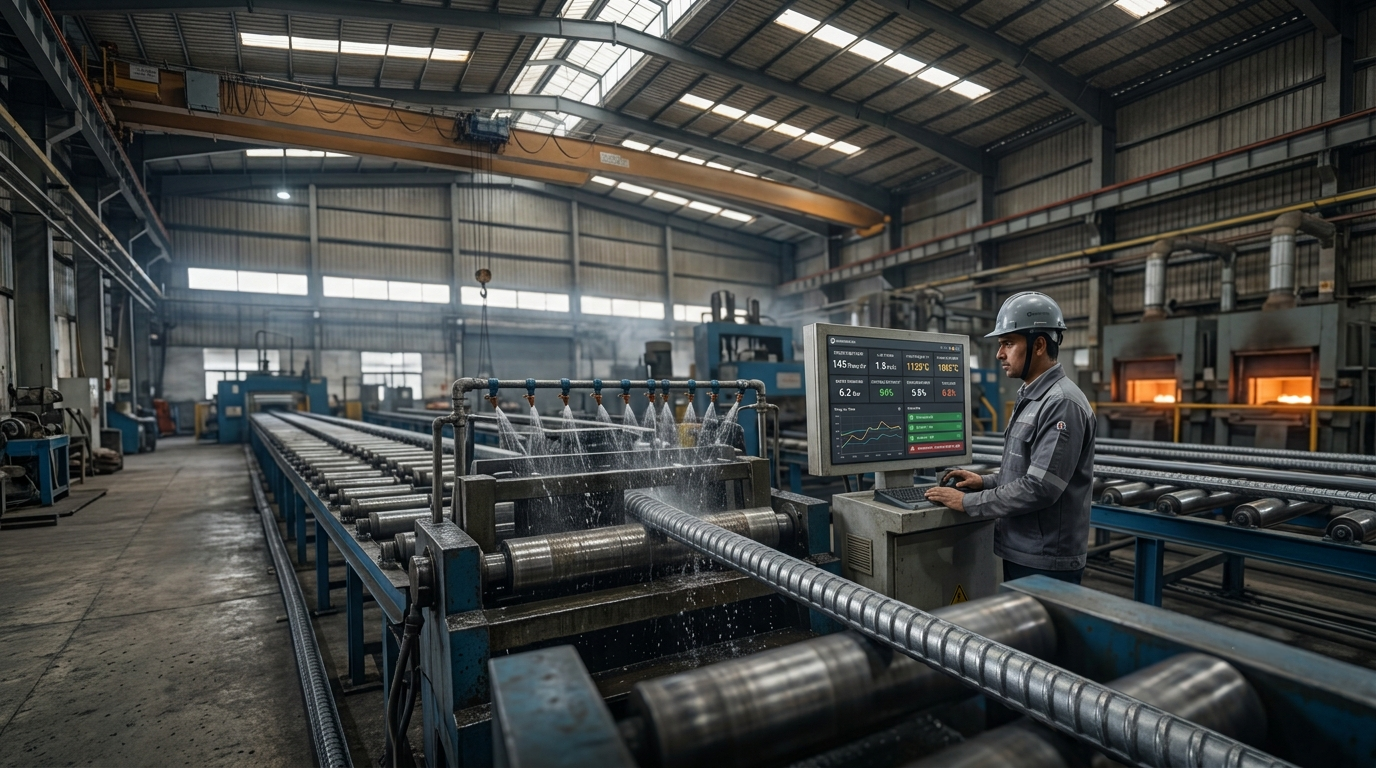
After steel billets are heated and rolled into reinforcement bars, they pass through a specially designed water-cooling system.
Water rapidly cools the outer surface, while the core retains much of its heat. This rapid cooling transforms the outer layer into a hard structure called martensite.
When the bar leaves the cooling system, heat from the hotter core moves towards the cooler outer surface. This residual heat tempers the martensite, improving its toughness and reducing brittleness.
This process is known as self-tempering. Unlike conventional tempering, it uses the heat already present inside the steel rather than requiring a separate reheating stage.
What Happens During the Three Stages?
The TMT manufacturing process involves three important stages.
1. Quenching
The hot steel bar passes through a water-cooling system. Its outer surface cools rapidly and transforms into martensite, while the core remains hot and largely austenitic.
2. Self-tempering
After leaving the cooling system, heat from the core moves towards the outer layer. This tempers the martensite, improving its toughness and deformability.
3. Atmospheric cooling
The bar is transferred to a cooling bed, where it gradually reaches room temperature. During this stage, the remaining austenitic core transforms mainly into ferrite and pearlite.
The finished bar has a tempered martensitic outer layer, an intermediate transition region, and a ferrite-pearlite core. Together, these microstructures contribute to the strength and ductility of TMT steel.
Why Is Self-Tempering Important?
Construction steel needs to offer both strength and ductility. While strength helps a bar withstand loads, ductility allows it to deform without suddenly breaking.
Self-tempering helps achieve this balance in several ways.
Reduces brittleness: Martensite formed during rapid cooling is hard but relatively brittle. Tempering modifies this structure, improving its toughness and ability to deform.
Balances strength and ductility: The tempered martensitic outer layer contributes to strength, while the ferrite-pearlite core provides greater ductility.
Supports structural performance: Buildings experience different types of loads throughout their lifetime. Ductile reinforcement steel is particularly important in seismic design because it can deform and absorb energy before failure. However, earthquake resistance also depends on structural design, reinforcement detailing and construction quality.
Helps develop desired mechanical properties: Factors such as cooling intensity, temperature, bar diameter and chemical composition influence the final microstructure and properties of the steel.
For manufacturers like Kalliyath TMT Steel Bars, achieving the required balance of strength and ductility is an important consideration in the production of reinforcement steel. This is why controlling the manufacturing process and maintaining consistent quality matter as much as the raw materials used.
Self-tempering is therefore an important part of producing TMT bars with the mechanical properties required for construction.
Does Self-Tempering Alone Make a TMT Bar High Quality?
Not quite. The quality of a TMT bar depends on several factors working together.
Raw material quality, chemical composition, rolling conditions, and cooling control all influence the finished product. Even self-tempering needs to be properly controlled to achieve the desired microstructure.
This is why manufacturing should always be supported by quality testing.
Under IS 1786, the Indian Standard for high-strength deformed steel bars and wires for concrete reinforcement, TMT bars must meet specified requirements for properties such as yield strength, tensile strength, elongation, bend and rebend performance.
When comparing the best TMT steel bars in Kerala, look beyond brand names and prices. Check the applicable BIS certification, product grade, and test reports to understand whether the steel meets the requirements of your construction project.
What Should You Look for When Buying TMT Steel?
Choosing reinforcement steel can feel like a technical decision, especially when there are different grades, sizes, and manufacturers available.
Here are a few things worth checking:
- Check the grade: Fe 500, Fe 550D, and other grades have different specified mechanical properties. Choose according to your structural engineer’s recommendation.
- Verify BIS certification: Ensure the product complies with the applicable Indian Standard.
- Ask about testing: Check whether the manufacturer conducts regular quality tests and provides relevant reports.
- Consider the manufacturer: Look at production capabilities, quality-control practices, and consistency.
- Follow professional advice: Steel grade and diameter should be selected based on the structural design.
When comparing the top TMT bars in Kerala, remember that the real value of steel lies in its performance, not just its marketing claims
Frequently Asked Questions
1. What is self-tempering in TMT steel bars?
Self-tempering is the process in which heat retained in the core moves towards the cooler outer surface, tempering the martensitic layer and improving its toughness.
2. Is self-tempering different from quenching?
Yes. Quenching rapidly cools the outer surface of the steel bar. Self-tempering happens afterwards, when residual heat from the core tempers the hardened outer layer.
3. What is the role of the core in a TMT bar?
The core mainly develops a ferrite-pearlite structure during atmospheric cooling. This contributes to the ductility of the bar.
4. Does self-tempering improve the strength of TMT bars?
Self-tempering primarily improves the toughness and deformability of the outer layer while helping retain its strength. Overall strength depends on the complete manufacturing process and steel composition.
5. Does every TMT bar use the same self-tempering process?
No. Manufacturing equipment, cooling arrangements, and process parameters can vary between manufacturers and production methods.
6. Why should I consider the manufacturing process when buying TMT steel?
The manufacturing process influences the internal structure and mechanical properties of the finished bar. Checking certifications and test reports helps you make a more informed purchase.
The Difference Is in What Goes Into Making the Steel
Once a building is complete, the reinforcement bars remain hidden inside the concrete. But their quality continues to matter throughout the life of the structure.
Self-tempering may happen within seconds during manufacturing, but it plays an important role in developing the properties required of modern reinforcement steel.
At Kalliyath TMT Steel Bars, quality remains an important consideration in construction materials. Because building with confidence starts with understanding the materials that go into every structure.
Recent Blogs
How Incorrect Cutting and Bending Can Affect TMT Bar Performance
Read Now
Recycled TMT vs Iron-Ore TMT: Is Recycled Steel Just as Strong?
Read Now
Small Bar, Big Role: Where 6mm TMT Bars Belong in Your Home
Read Now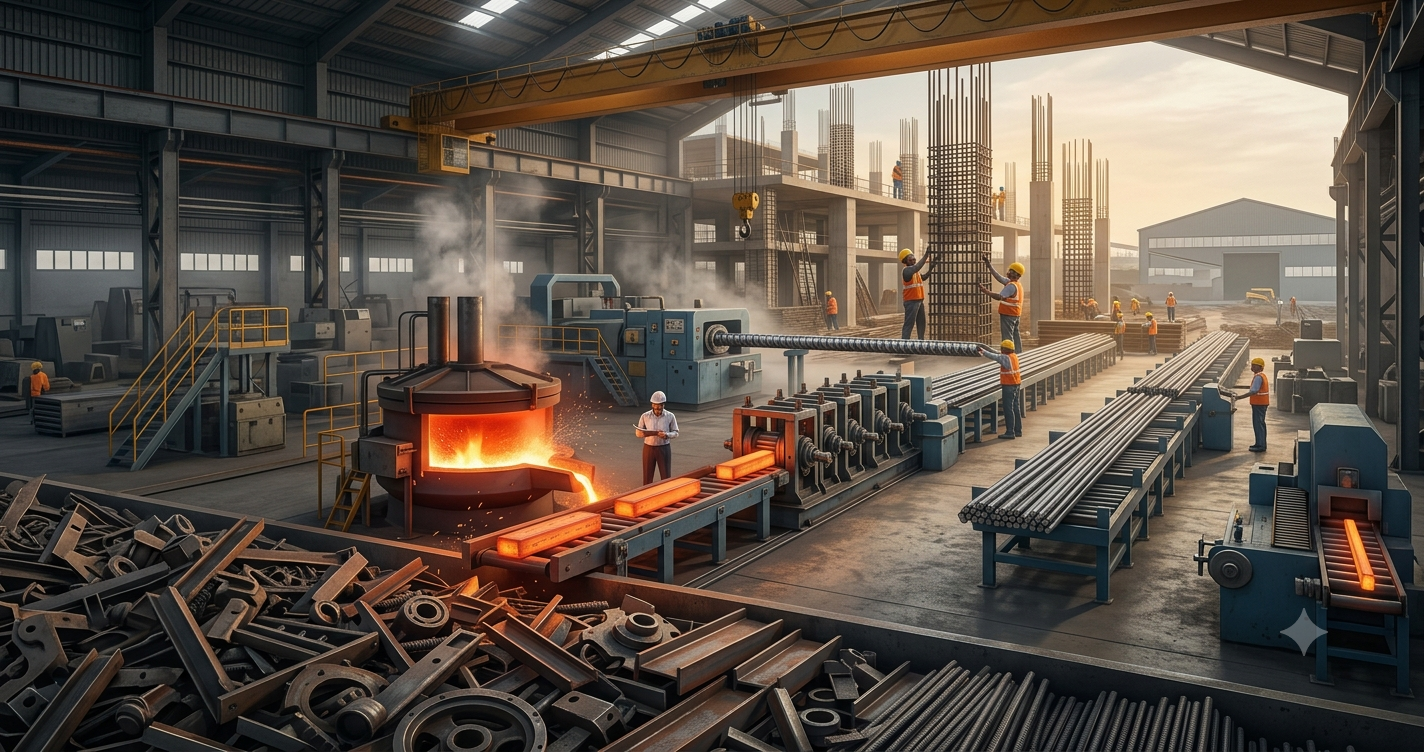
On-Site Cutting vs. Ready-to-Use Cut & Bend Steel: What Really Saves Money?
Read Now