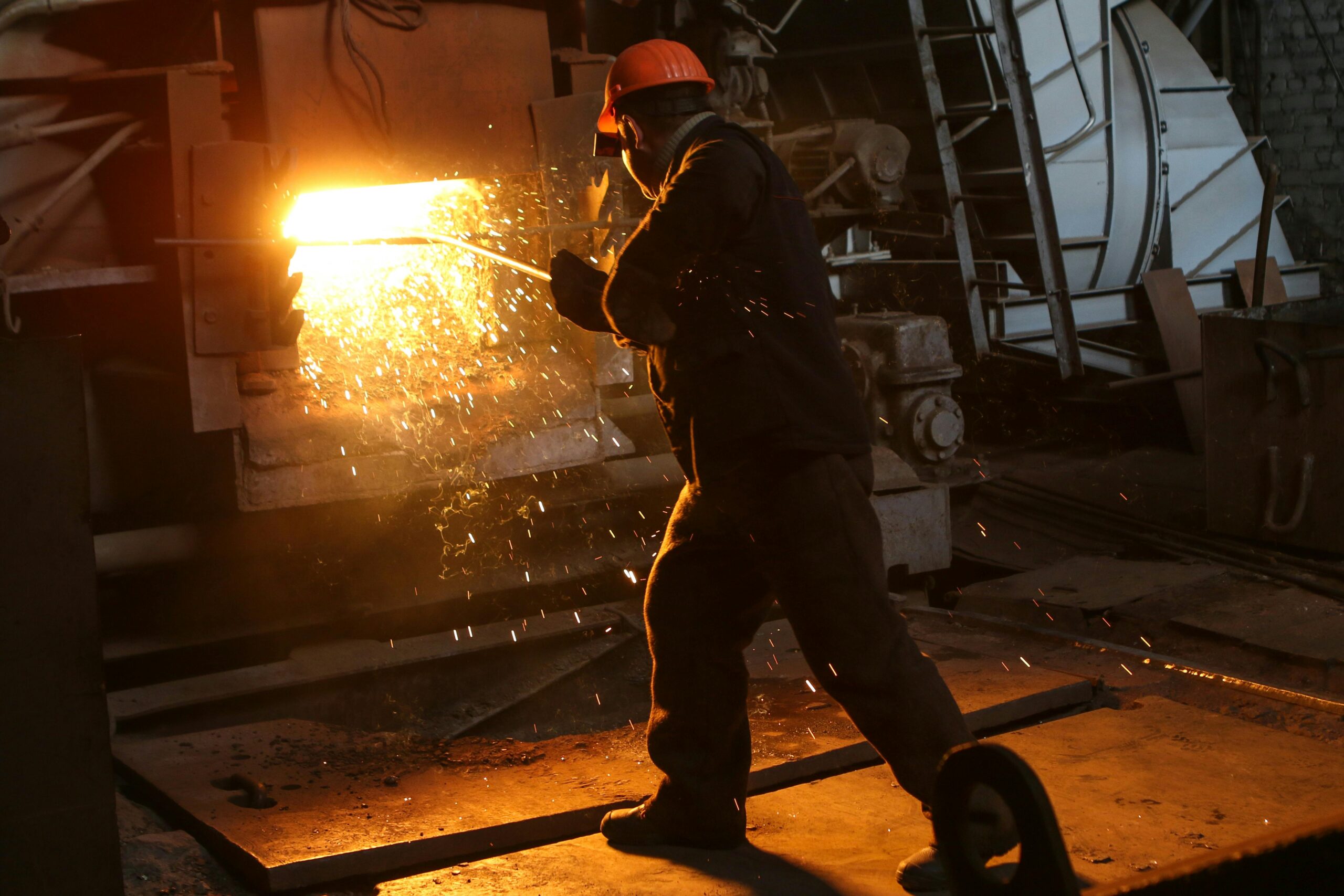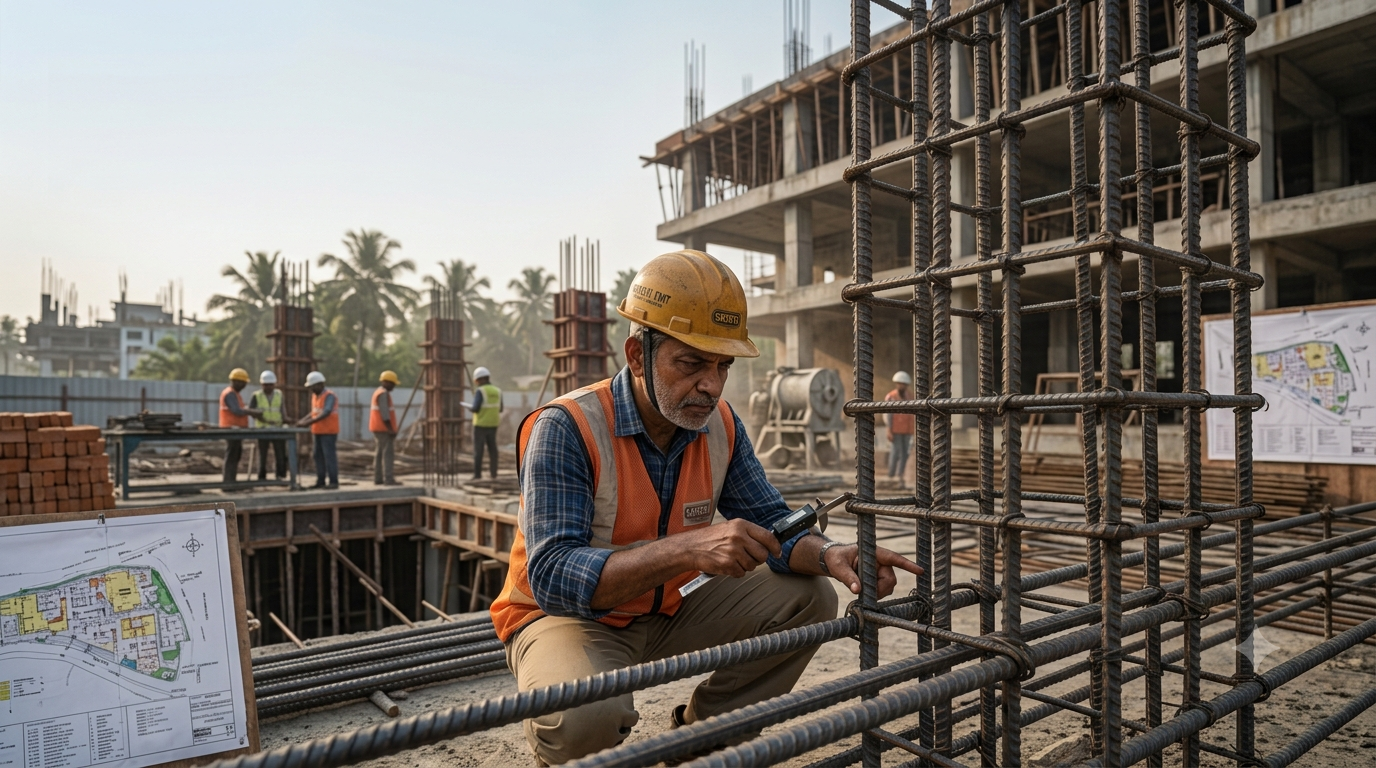
Small Bar, Big Role: Where 6mm TMT Bars Belong in Your Home
When we talk about TMT steel bars for a home, bigger often sounds better.
12mm. 16mm. 20mm.
The numbers get bigger as the structure gets stronger. But there is another size that quietly plays an important role in construction: the 6mm TMT bar.
Small in diameter, easy to handle, and useful for specific reinforcement requirements, 6mm bars have their own place in residential construction. The key is knowing where they belong and where they don’t.
Because when it comes to steel reinforcement, using the right bar for the right job matters more than simply choosing the biggest one.
What is a 6mm TMT bar?
A 6mm TMT bar is a thermo-mechanically treated steel reinforcement bar with a nominal diameter of 6mm.
Like other TMT bars, it is designed to work with concrete by providing tensile reinforcement. The steel and concrete work together: concrete handles compression effectively, while steel helps resist tensile forces.
But not every part of a house carries the same kind of load.
That is why reinforcement comes in different diameters.
Larger bars are generally used where the structural design requires greater reinforcement area. Smaller bars, including 6mm bars, can be used for specific reinforcement and detailing applications where the structural design calls for them.
In other words, 6mm isn’t “lesser” steel. It is steel for a different job.
Where can 6mm TMT bars be used in a home?
The exact application should always come from the structural engineer’s drawings. But 6mm TMT bars can have a role in several smaller reinforcement and detailing requirements.
1. Stirrups and ties
One of the most familiar applications for smaller-diameter reinforcement is in stirrups and ties.
Stirrups are closed loops of reinforcement placed around the main bars in RCC beams. They help hold the reinforcement cage together and contribute to the beam’s resistance to shear.
Similarly, lateral ties are used around longitudinal reinforcement in columns to keep the bars properly positioned and provide confinement.
The diameter and spacing of these bars should be decided according to the structural design.
This is where a quality 6mm TMT bar can become a surprisingly important part of a much larger structural system.
2. Smaller reinforcement requirements
Not every concrete element in a house is a major load-bearing member.
Depending on the design, smaller-diameter reinforcement can be suitable for certain minor or secondary concrete elements and detailing applications.
The important word here is design.
A 6mm bar should never be selected simply because the element looks small or because it costs less. The required diameter, grade, spacing, and quantity must come from the structural requirement.
3. Reinforcement in non-structural applications
There are also concrete applications around a home where reinforcement may be needed for crack control, shape retention or general stability rather than to carry the primary structural loads of a building.
In such cases, smaller reinforcement may be specified depending on the application.
Again, the principle is simple:
The size of the bar should follow the job, not the other way around.
Where should you NOT use a 6mm TMT bar?
This is perhaps the more important question.
A 6mm bar should not be treated as a universal replacement for larger reinforcement.
For example, the main reinforcement in beams, columns, foundations or structural slabs cannot be decided simply by choosing a smaller bar because it is easier to handle or cheaper.
These members are designed to carry specific loads. Their reinforcement depends on factors such as span, load, structural configuration, concrete grade, steel grade and detailing requirements.
That is why replacing a specified 10mm, 12mm or 16mm bar with a 6mm bar without approval from the structural engineer is a bad idea.
Steel reinforcement is not a place for guesswork.
Why does quality matter even more with smaller bars?
A common misconception is that because a 6mm bar is small, its quality is less important.
It is exactly the opposite.
Every reinforcement bar becomes part of the concrete structure. Its chemical composition, mechanical properties, dimensions, surface characteristics, bendability, and bond with concrete all matter.
BIS’s IS 1786 lays down requirements for high-strength deformed steel reinforcement, including parameters such as nominal size, mass, tensile properties, elongation, bend and re-bend performance and surface characteristics.
So when choosing between TMT steel bars, don’t look only at the diameter.
Look at the grade, certification, manufacturing quality, and consistency behind the diameter.
Why Kalliyath 6mm TMT bars stand out
6mm TMT bars are not new to Kalliyath.
Kalliyath has been manufacturing 6mm TMT bars since 2008 and states that it was the first company in Kerala to manufacture 6mm TMT bars, including Fe 500 grade 6mm bars with ISI certification.
The company’s manufacturing process uses automated rolling technology and quality-control systems designed to maintain consistency in dimensions, mechanical properties and surface characteristics.
That matters because a small bar still needs to perform like a properly engineered reinforcement bar.
Kalliyath’s TMT manufacturing process also includes chemical analysis, mechanical testing, bend and re-bend testing, and batch-level quality checks.
For homeowners, that translates into a simple takeaway:
Don’t choose steel only by size. Choose it by what it is made to do, and how reliably it does it.
6mm TMT vs larger TMT bars: Does bigger mean better?
Not necessarily.
Imagine using a thick rope where a thin but strong cord is all you need. You might still get the job done, but you have used the wrong material for the application.
The same principle applies to reinforcement.
A 6mm bar has a smaller cross-sectional area than an 8mm, 10mm or 12mm bar. Larger bars can therefore provide more steel area per bar. But that does not automatically make them the right choice for every reinforcement detail.
Good structural design is about using the right amount and type of reinforcement in the right location.
So the question should not be:
“Which TMT bar is the strongest?”
It should be:
“Which TMT bar is right for this requirement?”
How to choose the right TMT bars for your home
If you are building a new home, don’t make the steel decision based only on what your contractor usually buys.
Ask these questions:
- What grade of TMT steel has been specified by the structural engineer?
- What diameters are required for different structural elements?
- Does the steel conform to the relevant BIS standard?
- Is the manufacturer properly certified?
- Are the bars tested for mechanical properties?
- Is the weight and dimensional consistency maintained?
- Can the manufacturer or supplier provide quality documentation?
- Is the steel suitable for the environmental conditions of the project?
These questions are far more useful than simply asking for the best TMT bars.
Because the best steel is not necessarily the thickest steel. It is the steel that meets the required standard and performs reliably where it is specified
FAQs about 6mm TMT bars
1.Can 6mm TMT bars be used for house construction?
Yes. 6mm TMT bars can be used for specific reinforcement and detailing applications in residential construction, depending on the structural design. They should not be used as a substitute for larger primary reinforcement without approval from the structural engineer.
2.Are 6mm TMT bars strong enough?
A 6mm bar can meet the required strength and mechanical properties for its specified grade. However, strength is not determined by diameter alone. The grade, steel quality, manufacturing process and the quantity and arrangement of reinforcement all matter.
3.Can 6mm TMT bars be used in beams?
They can be used for certain beam reinforcement details, such as stirrups, where permitted by the structural design. They should not automatically be used as the main longitudinal reinforcement of a beam.
4.Can 6mm TMT bars be used in columns?
Smaller bars may be specified for certain column detailing requirements, such as ties, depending on the applicable structural design and code requirements. The main longitudinal reinforcement of a column is a separate matter and must follow the engineer’s design.
5.Can 6mm TMT bars be used for slabs?
The answer depends on the slab design and the reinforcement requirement. Homeowners should not assume that 6mm bars can replace the specified slab reinforcement. The structural drawing should determine the required diameter, spacing and quantity.
6.Are 6mm TMT bars cheaper than larger TMT bars?
A smaller-diameter bar contains less steel per metre, so its material cost per metre is lower. But choosing reinforcement based only on price is not advisable. The correct diameter should always be determined by structural requirements.
7.What should I check before buying 6mm TMT bars?
Check the steel grade, BIS/ISI certification, manufacturer credentials, dimensions, weight consistency, mechanical properties, and available quality documentation. Buying from a reliable manufacturer or authorised supplier also helps ensure that the material supplied matches the specified product.
What is more important: TMT bar size or quality?
Both matter, but they answer different questions.
Size determines whether the bar is appropriate for a particular structural requirement. Quality determines whether that bar can reliably deliver the properties it is supposed to have.
You need both.
Small diameter. Serious responsibility
A 6mm TMT bar may not be the biggest piece of steel on a construction site.
But construction isn’t about making every component bigger.
It is about making every component right.
From the foundation to the smallest reinforcement detail, every bar has a role to play. And when that role calls for 6mm, what matters is not just the number on the bar.
It is the quality behind it.
Kalliyath TMT. Quality steel for every requirement.
Recent Blogs
On-Site Cutting vs. Ready-to-Use Cut & Bend Steel: What Really Saves Money?
Read Now
The Weak Link Nobody Checks: Why Your Binding Wire Matters
Read Now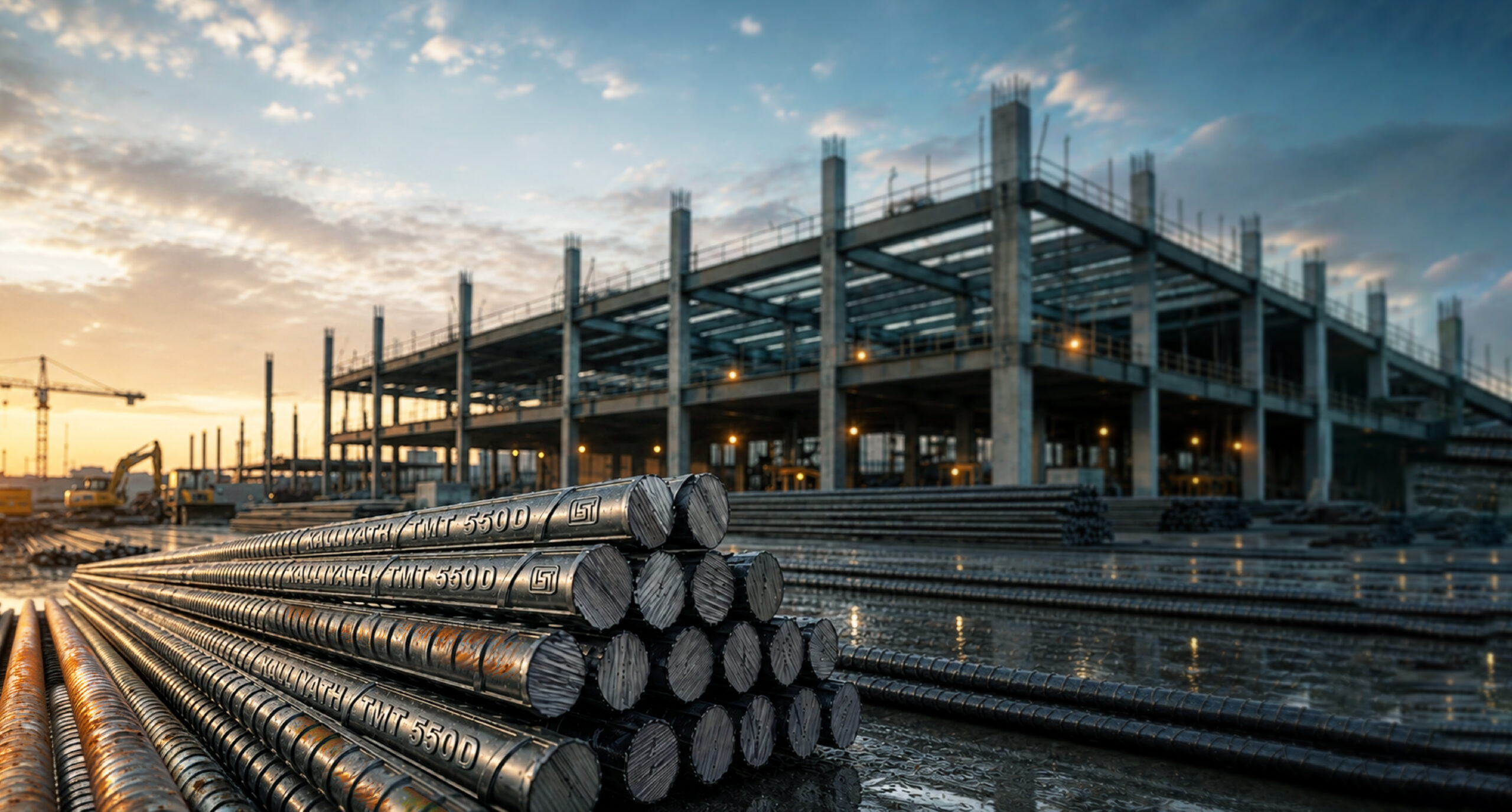
How Kalliyath Achieves 100% Sustainable Production
Read Now
Steel Without Mining: A Revolution in Sustainable Steelmaking
Read Now