Steel Without Mining: A Revolution in Sustainable Steelmaking
For centuries, steelmaking has followed a relatively linear path: extract iron ore from the earth, process it, turn it into steel, use it, and eventually discard it.
But what if the steel we need tomorrow could increasingly come from the steel we have already used today?
That idea is at the heart of one of the biggest shifts taking place in modern steelmaking. Through steel recycling and technologies such as Electric Arc Furnaces (EAF), steel manufacturers can melt and transform scrap steel into new steel products, reducing the need for virgin raw materials such as iron ore and coal.
This does not mean that the world can eliminate mining from steel production overnight. There is still not enough recovered steel to satisfy global demand. But it does point towards a more circular future, one where steel remains in use instead of constantly requiring new resources from the earth.
And for a material used in everything from buildings and bridges to vehicles and infrastructure, that shift matters.
Quick Takeaway
- Steel can be recycled repeatedly without losing its inherent properties.
- Electric Arc Furnaces can use recycled steel scrap as the primary raw material.
- Using scrap reduces the need for virgin iron ore, coal, and limestone.
- Recycling steel supports a circular economy by keeping valuable material in use.
- Scrap-based steelmaking can have significantly lower resource use and emissions than conventional steelmaking routes.
- Sustainable steel is not simply about recycling; it also depends on efficient manufacturing, energy sources, quality control, and responsible resource management.
- The future of steel is likely to combine recycled scrap with other low-carbon production technologies rather than rely on a single solution.
Why Does Steel Need a New Approach?
Steel is one of the world’s most important construction and engineering materials. Its strength, durability, and versatility have made it essential to modern infrastructure.
But traditional steelmaking can be resource-intensive.
The conventional blast furnace-basic oxygen furnace (BF-BOF) route relies heavily on iron ore and metallurgical coal to produce new steel. Mining and processing these raw materials require significant amounts of energy and natural resources.
At the same time, enormous quantities of steel already exist in the world.
Cars reach the end of their lives. Buildings are demolished. Industrial equipment is replaced. Old machinery and construction materials become scrap.
But steel does not have to become waste simply because its first application has ended.
It can be recovered, sorted, melted, and transformed into new steel.
That is where the idea of a circular steel industry begins.
What Does “Steel Without Mining” Actually Mean?
The phrase does not mean that every tonne of steel can currently be produced without any mined material.
It means something more interesting.
Instead of always starting with iron ore extracted from the ground, steelmaking can increasingly start with steel that already exists.
The material may have once been part of a vehicle, building, machine, or structural component. Once recovered and properly processed, that scrap can become the raw material for another generation of steel products.
This creates a loop:
Steel product → End of life → Scrap → Steelmaking → New steel product
Rather than following a one-way journey from mining to manufacturing to disposal, the material keeps moving through the economy.
This is the foundation of the circular economy.
How Is Steel Made From Scrap?
One of the key technologies enabling this transition is the Electric Arc Furnace (EAF).
Unlike the traditional blast furnace route, an EAF can use predominantly recycled steel as its metallic input.
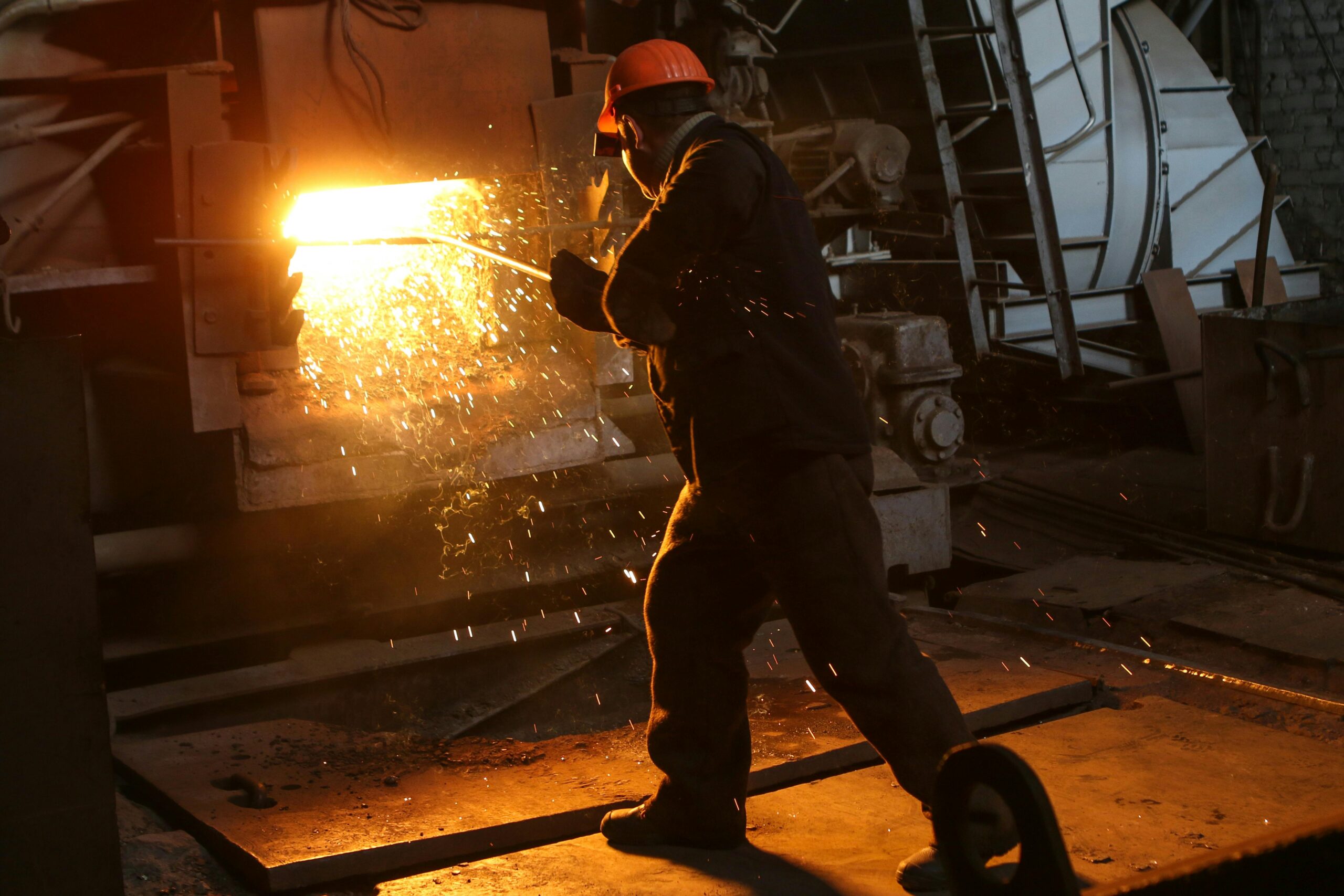
The process begins with collecting and sorting steel scrap. The scrap is then charged into the furnace, where powerful electric arcs generate the heat needed to melt it.
Once molten, the steel can be refined and adjusted to achieve the required chemical composition and properties. It can then move through casting and rolling processes to become new steel products, including construction products such as reinforcing bars.
In simple terms:
Old steel goes in.
Molten steel comes out.
New steel products are made.
Modern steelmaking also involves careful control of scrap quality and chemistry. Different types of scrap contain different elements, so sorting and process control are essential for producing steel that meets the required specifications.
This is why recycling steel is not simply a matter of melting down whatever metal is available.
The real revolution is controlled recycling.
Why Is Recycling Steel So Important?
The biggest advantage of recycling steel is that it keeps an already valuable material in circulation.
According to the World Steel Association, using one tonne of steel scrap in steel production can avoid the consumption of approximately 1.4 tonnes of iron ore, 740 kg of coal and 120 kg of limestone, while avoiding around 1.5 tonnes of CO₂ emissions based on its life-cycle inventory calculations.
That makes scrap more than just waste.
It is a resource.
And unlike many materials, steel can be recycled repeatedly without losing its fundamental properties. Its magnetic properties also make it relatively easy to recover from many waste streams.
This creates a powerful opportunity for the construction industry.
The steel used in today’s buildings can eventually become the raw material for tomorrow’s buildings.
Does Recycled Steel Mean Lower-Quality Steel?
This is one of the most common misconceptions about recycled steel.
Recycling does not automatically mean compromising on quality.
Steel is not like a material that becomes permanently weaker each time it is recycled. Properly processed steel scrap can be melted and refined to produce steel with the required chemical composition and performance characteristics.
Of course, quality depends on the manufacturing process.
The scrap must be properly selected and sorted. Chemical composition needs to be controlled. The steelmaking process needs to be carefully monitored. And the finished product must meet the required standards and specifications.
So the important question isn’t:
“Is it recycled steel?”
It is:
“How responsibly and precisely was that steel made?”
That distinction is critical when choosing steel for structural applications.
From Linear Steelmaking to Circular Steelmaking
The traditional model of manufacturing can be simplified as:
Extract → Manufacture → Use → Discard
A circular model looks very different:
Recover → Recycle → Manufacture → Use → Recover again
Steel is particularly well suited to this model because it can be recycled repeatedly while retaining its essential properties.
This is why steel is considered a permanent material in the circular economy.
The goal isn’t simply to manufacture more steel.
It is to make better use of the steel we already have.
Can Steel Really Be Made Without Iron Ore?
Not entirely, not yet.
This is where the conversation around sustainable steel needs some nuance.
There simply isn’t enough scrap available today to satisfy the world’s total steel demand through scrap-based production alone. Steel products used in buildings, bridges and other infrastructure can remain in service for decades before they become available for recycling.
That means virgin raw materials will continue to play an important role in steelmaking for the foreseeable future.
The more realistic future is therefore not:
Mining OR recycling.
It is:
Mining + recycling + cleaner technologies + better resource efficiency.
The steel industry is already exploring multiple pathways to reduce its environmental impact, including greater use of scrap, EAF technology, direct reduced iron and lower-carbon energy sources. There is no single technology that will solve the industry’s entire decarbonisation challenge.
What Makes a Sustainable Steel Manufacturer?
Sustainability in steelmaking is about much more than putting the word “recycled” on a product.
A genuinely responsible steel manufacturing approach needs to consider the entire production process.
1. Responsible Raw Material Use
Maximising the use of suitable recycled steel can reduce dependence on virgin resources and help keep valuable material in circulation.
2. Efficient Manufacturing
Modern furnaces, process optimisation and energy-efficient operations can reduce the resources required to produce steel.
3. Quality Control
Sustainable steel still needs to be reliable steel.
For construction applications, manufacturers must maintain tight control over chemical composition, mechanical properties, dimensional accuracy, and consistency.
4. Waste Reduction
Steelmaking produces co-products such as slag and processed gases. Modern steel plants increasingly find productive uses for these materials rather than treating them simply as waste. Water can also be treated and recirculated within steelmaking operations.
5. Designing for the Future
The most sustainable steel is not simply steel produced efficiently.
It is steel that performs well, lasts for decades, and can eventually be recovered and recycled again.
That creates a much longer value chain for every tonne of steel produced.
The Future of Steel Is Circular
The idea of steel without mining may sound like a distant future.
In reality, part of that future already exists.
Steel scrap is already being collected, sorted, and recycled into new steel around the world. Electric Arc Furnace technology has made it possible to produce steel using predominantly recycled material, while advances in manufacturing continue to improve efficiency and quality.
But the real transformation will come when recycling, efficient production, responsible sourcing and cleaner energy work together.
For a material as fundamental as steel, that is more than an environmental improvement. It is a completely different way of thinking about manufacturing.
The future of steel isn’t just about making more.
It’s about making what we already have last longer.
Choosing Quality Steel for a Sustainable Future
Sustainability should never become an excuse to compromise on structural quality.
When selecting TMT bars for a construction project, look beyond the label and evaluate the manufacturer, manufacturing process, product specifications, testing practices, and compliance with applicable standards.
For builders and engineers looking for quality steel bars, consistency is just as important as strength.
The right TMT bar should provide dependable mechanical properties, dimensional consistency, and the performance required for the intended structural application.
For those looking for premium steel bars in Kerala, choosing an established manufacturer with strong quality-control practices is an important part of building responsibly.
After all, sustainability is ultimately about creating structures that use resources wisely, perform reliably, and remain valuable for generations.
Kalliyath TMT: Building With Quality, Thinking Beyond Steel
At Kalliyath TMT, the future of steel is not just about producing stronger reinforcement bars. It is about recognising the responsibility that comes with manufacturing a material so closely connected to the growth of our homes, buildings and infrastructure.
As the industry moves towards more circular and resource-efficient steelmaking, manufacturers have an important role to play in combining quality, consistency and responsible production.
For customers looking for the best quality TMT steel bars in Kerala, the choice should ultimately come down to more than a brand name. It should come down to trust in the manufacturing process, confidence in product quality, and the assurance that the steel supporting your structure has been made with care.
That is what makes a trusted TMT bar manufacturer in Kerala relevant—not simply the ability to make steel, but the ability to make it responsibly and consistently.
Because the steel of the future shouldn’t just build stronger structures.
It should build a more sustainable future, too.
Frequently Asked Questions
1. Can steel be made entirely from recycled steel?
Yes, some steelmaking routes such as Electric Arc Furnaces can use 100% recycled steel as their metallic input. However, there is currently not enough scrap available globally to meet total steel demand through recycled steel alone.
2. Does recycled steel lose its strength?
No. Steel can be recycled repeatedly without losing its inherent properties. However, proper sorting, refining, and quality control are essential to produce steel that meets the required specifications.
3. Is EAF steel more sustainable?
EAF steelmaking, particularly when using recycled steel scrap, generally uses fewer virgin resources and has lower energy use and emissions than the conventional blast furnace route. However, its overall environmental performance also depends on factors such as the electricity source and the type and quality of metallic inputs used.
4. Why is steel recycling important for sustainable construction?
Recycling keeps steel in circulation and reduces the need for virgin raw materials. Since steel can be recycled repeatedly, it can form an important part of a circular construction economy.
5. How do I choose quality TMT bars in Kerala?
Look for a reliable manufacturer with consistent quality-control practices, appropriate product certifications, and standards compliance. The right TMT bar should meet the structural requirements of the project while offering dependable mechanical properties and consistency.
6. Is sustainable steel suitable for building construction?
Yes. Sustainability and structural performance are not mutually exclusive. Properly manufactured steel can deliver the required mechanical properties while using recycling and resource-efficient manufacturing practices to reduce its environmental impact.
Recent Blogs
Small Bar, Big Role: Where 6mm TMT Bars Belong in Your Home
Read Now
On-Site Cutting vs. Ready-to-Use Cut & Bend Steel: What Really Saves Money?
Read Now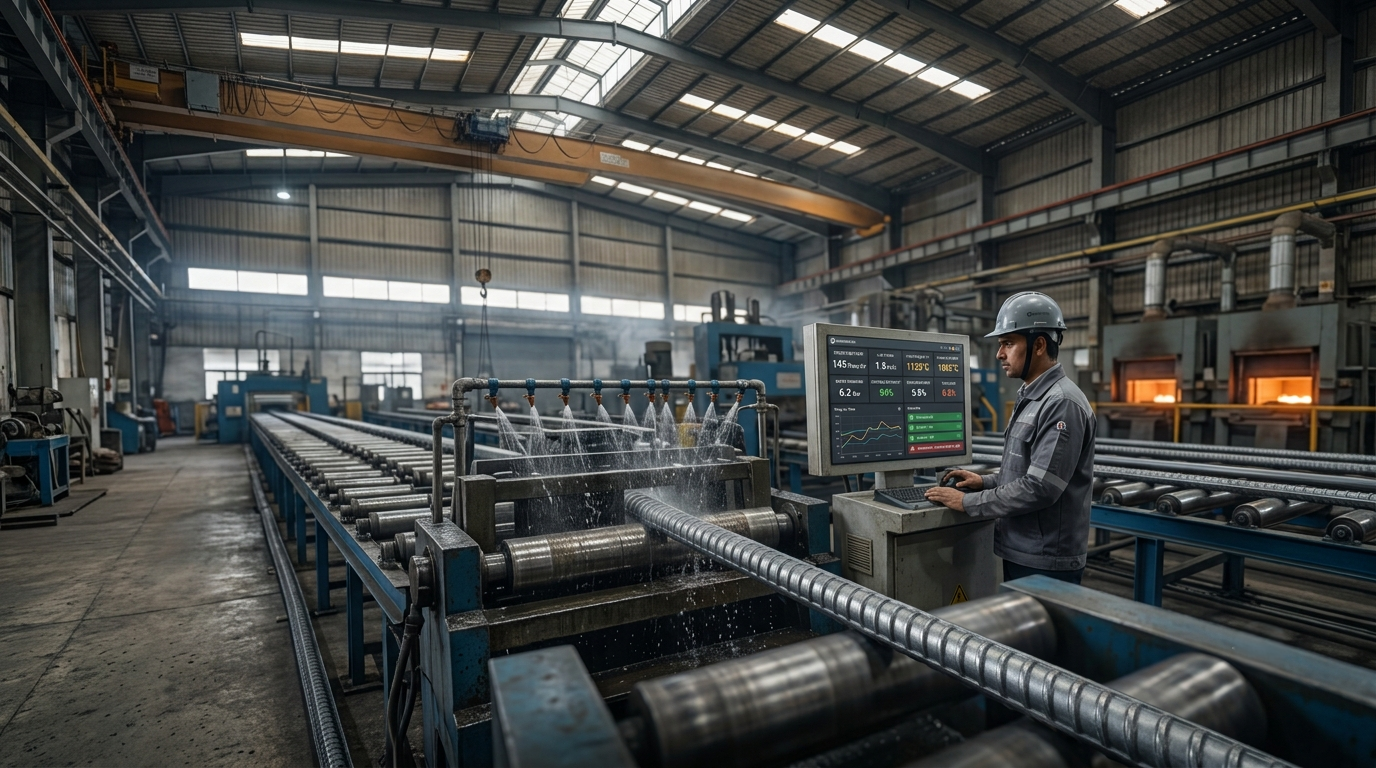
The Weak Link Nobody Checks: Why Your Binding Wire Matters
Read Now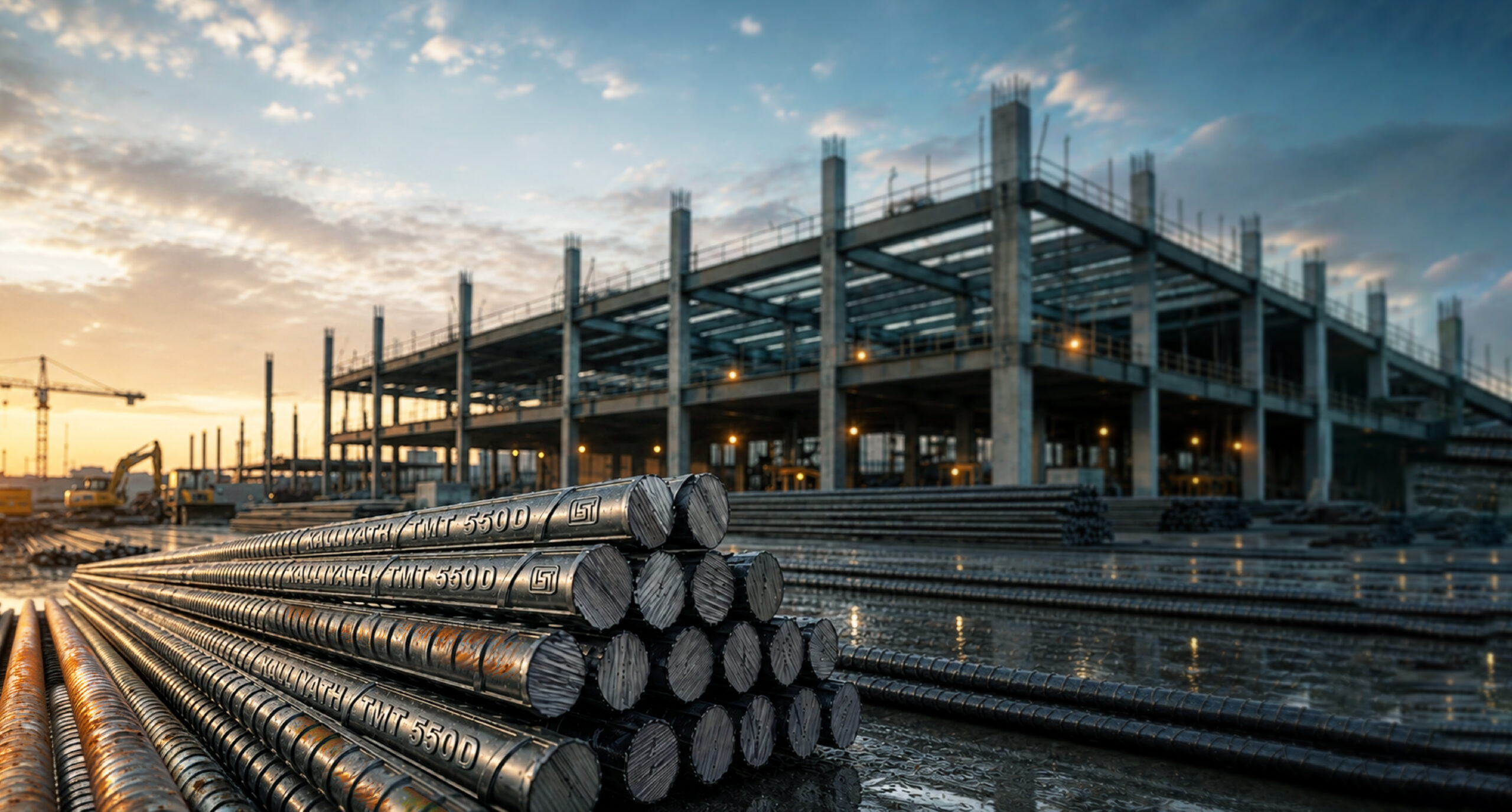
How Kalliyath Achieves 100% Sustainable Production
Read Now