Myths and Facts About TMT Steel Bars
When you’re building a home, an apartment, a commercial space, or a major infrastructure project, there are plenty of decisions to make. But some choices are far more important than others.
One of them is the TMT steel bar.
It may not be the most visible part of a building, but it plays a critical role in its structural strength. And when there are so many brands, grades, specifications, and claims in the market, it is natural to have questions.
Is a heavier bar always better? Does a higher grade automatically mean better steel? Can you identify quality just by looking at a TMT bar? And how do you know whether you are actually buying a premium product?
Let’s separate the common myths from the facts.
Myth 1: A heavier TMT bar is always a better TMT bar
Fact: Weight alone does not determine quality.
It is easy to assume that a heavier bar means more steel and therefore more strength. But TMT bars are manufactured to specific standards, grades, and dimensional requirements. What matters is whether the bar consistently meets the required specifications.
Uniform weight per metre, proper dimensions, mechanical properties and chemical composition all matter.
For anyone looking for the Best Quality TMT Steel Bars in Kerala, the better question is not simply, “How heavy is the bar?” but “Does the bar consistently meet the required quality standards?”
At Kalliyath, quality checks cover factors such as tensile properties, bend-and-re-bend performance, surface characteristics, and batch-wise testing.
Myth 2: A higher grade automatically means better steel for every project
Fact: The right grade depends on the structural requirement.
Fe 500, Fe 500D, Fe 550, and other grades are not simply a ranking from “good” to “better”. Different grades offer different combinations of strength and ductility, and the appropriate choice should be based on the structural design and the recommendation of the project’s structural engineer.
So, if someone asks, “Which is the best TMT steel bar in Kerala?”, there isn’t a one-size-fits-all answer.
The best bar is the one that is appropriate for the project, manufactured consistently, and meets the required standards.
FAQ: How do I choose the right TMT grade?
Kalliyath: Start with your structural requirement rather than choosing purely by the highest number on the label. Your structural engineer can specify the grade required for your building based on its design, load, and application. The quality of the manufacturing process is equally important.
Myth 3: All TMT bars are basically the same
Fact: The manufacturing process makes a significant difference.
Two bars may look similar on the outside while differing considerably in their manufacturing quality, chemical composition, microstructure, and mechanical properties.
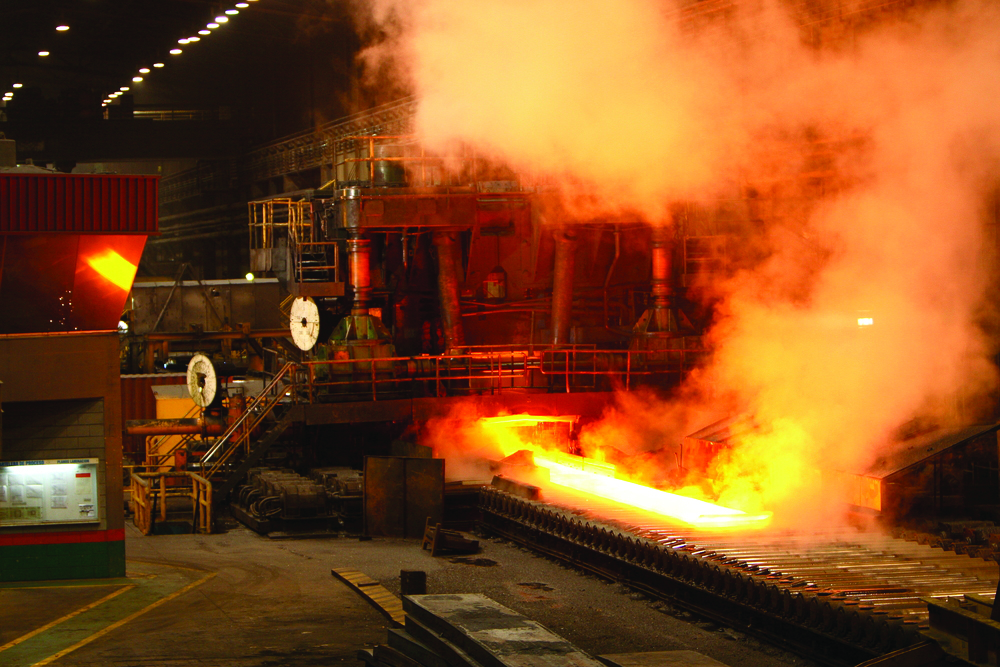
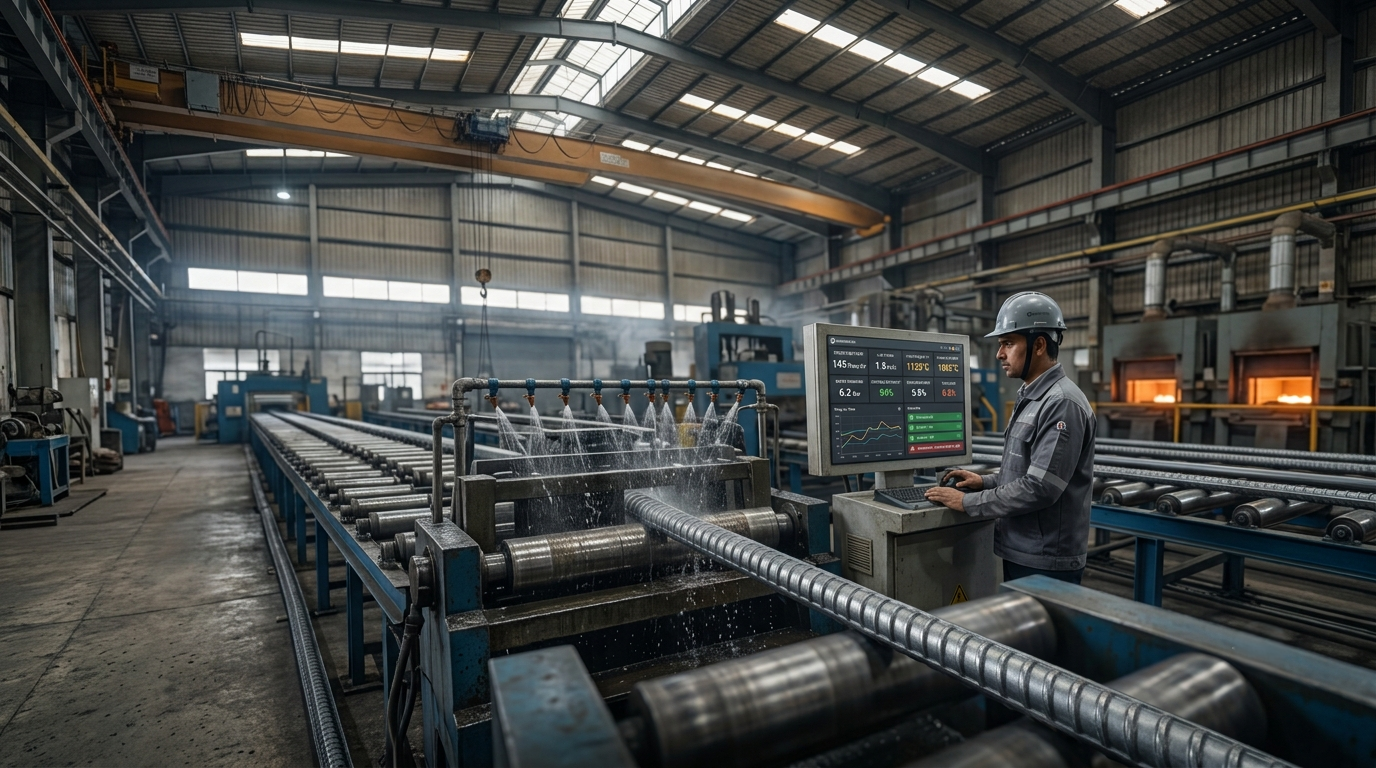
TMT stands for Thermo-Mechanically Treated. The process involves controlled heating, rolling, and rapid cooling to develop the desired combination of strength and ductility.
This means quality is not created at the shop counter. It begins much earlier, with the raw material and manufacturing process.
Kalliyath uses PLC-controlled Continuous Linear Rolling Mill technology and controlled manufacturing processes to maintain consistency across its TMT bars.
Myth 4: You can judge TMT steel quality just by looking at it
Fact: Appearance can tell you a few things, but it cannot tell you everything.
A bar with a clean surface and clearly defined ribs may look reassuring, but visual inspection cannot establish important properties such as yield strength, tensile strength, elongation or chemical composition.
That is where testing and certification matter.
For example, Kalliyath’s testing facilities include an optical emission spectrometer for analysing elements and a Universal Testing Machine for mechanical testing of rebars. Its quality process also includes checks for tensile properties, bend and re-bend properties, and surface characteristics.
FAQ: What should I check before buying TMT bars?
Kalliyath: Check the grade, applicable certification, manufacturer, batch details, test information, and source of purchase. You should also ensure that the bars are suitable for the structural specifications provided by your engineer.
Myth 5: TMT bars don’t need to be tested once they are manufactured
Fact: Consistent testing is part of consistent quality.
Steel manufacturing involves several variables, from raw material composition to rolling temperatures and cooling parameters. Monitoring these factors helps manufacturers maintain the required properties from batch to batch.
At Kalliyath, the quality management process includes checks on carbon steel billet composition, rolling temperatures, quenching parameters, and mechanical properties. Batch-wise test summaries are also made available through QR codes.
That traceability matters because quality should not be a matter of guesswork.
Myth 6: Ductility is less important than strength
Fact: Strength and ductility need to work together.
When we talk about steel, strength naturally gets most of the attention. But ductility is equally important in reinforced concrete structures.
A ductile TMT bar can undergo deformation before failure, giving a structure greater capacity to absorb and redistribute stresses. This becomes particularly important when structures experience dynamic or seismic forces.
That is why simply choosing the strongest-looking or highest-numbered bar is not enough. A well-engineered TMT bar needs a balanced combination of strength and ductility.
Kalliyath’s current product range includes 550D TMT bars designed with a focus on high strength and ductility, with the manufacturer specifying an elongation of up to 24% for the product.
Myth 7: Premium TMT steel is only about having a premium price
Fact: Premium quality is about what you get behind the price.
Nobody wants to spend more simply because a product has a premium label.
For premium steel bars in Kerala, the real value comes from factors such as manufacturing consistency, quality control, certification, mechanical performance, traceability, and long-term reliability.
A few rupees saved at the purchase stage may seem attractive, but structural materials are not where you want to make decisions based purely on the lowest price.
The real question is: what quality, consistency, and confidence are you getting for your investment?
FAQ: Why should homeowners care about the manufacturer?
Kalliyath: Because the quality of a TMT bar begins long before it reaches the construction site. A reliable manufacturer follows controlled processes, uses appropriate raw materials, tests the product, and maintains consistency across batches. That gives engineers, contractors, and homeowners greater confidence in the material being used.
Myth 8: Quality TMT steel is only about strength
Fact: Quality is much bigger than one number.
Strength is important, but it is only one part of the story.
A quality TMT bar should offer the right combination of strength, ductility, elongation, bonding with concrete, dimensional consistency, and resistance to environmental conditions.
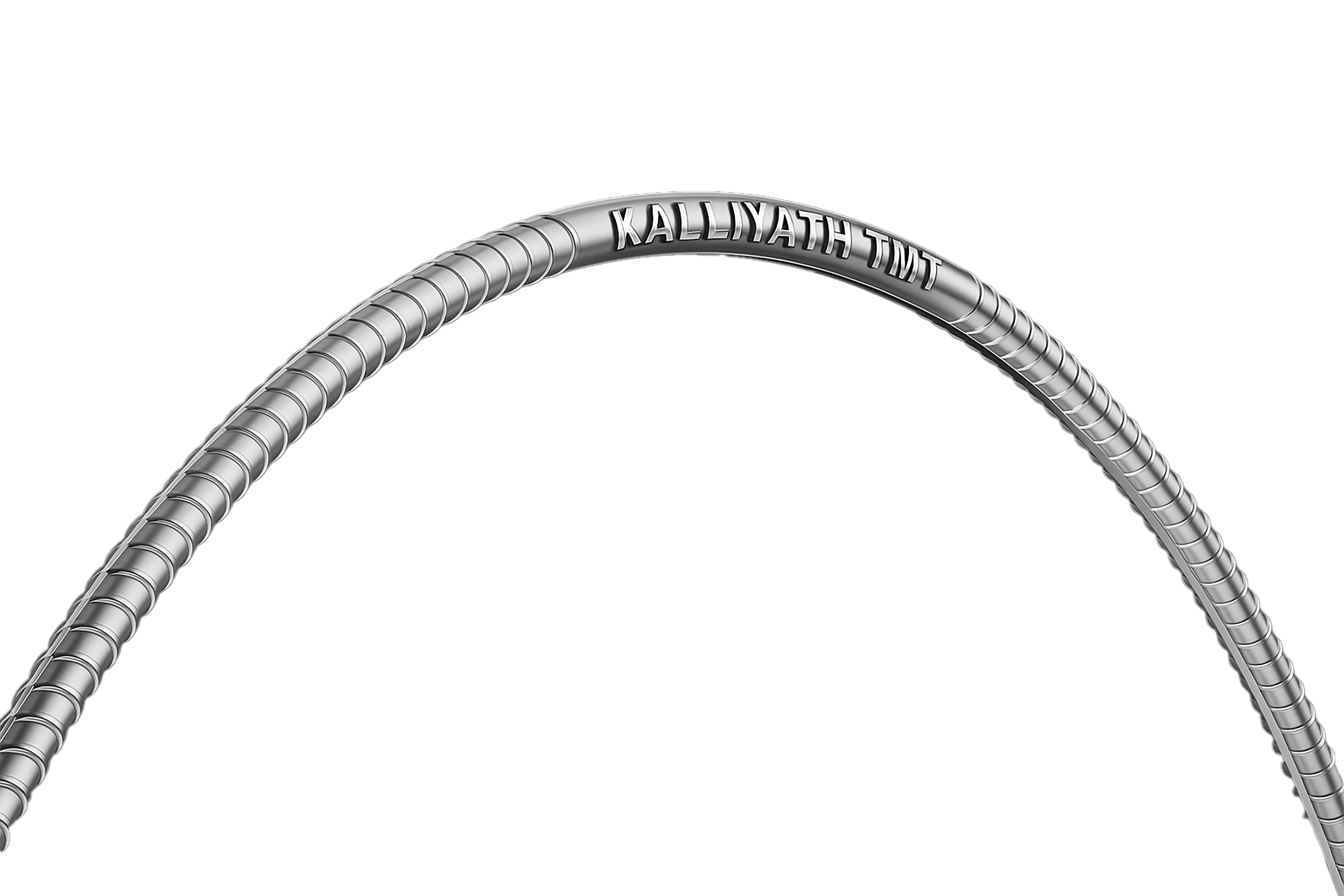
Rib geometry also matters because the ribs help create mechanical interlocking between the reinforcement and concrete. Kalliyath highlights optimum rib area as one of the factors contributing to bonding strength.
This is why choosing TMT steel should be a considered decision rather than a simple comparison of prices or grades.
So, what makes a TMT bar a reliable choice?
The answer comes down to consistency.
From the raw materials used to the rolling process, from heat treatment to testing, every stage contributes to the final product.
For a Trusted TMT bar manufacturer in Kerala, quality cannot stop at the factory gate. It has to translate into a product that engineers can specify, builders can work with, and homeowners can trust.
Kalliyath has been manufacturing TMT steel bars in Kerala since 2008 and states that it was Kerala’s first TMT steel manufacturer and the first in the state to receive BIS certification for steel bars.
Today, the brand also highlights certifications and quality systems, including BIS and ISO certifications, as well as independent test reports.
Ultimately, good construction starts with good decisions.
So, the next time someone says that all TMT bars are the same, remember: steel may look simple, but quality is built into every stage of its journey.
And when the strength of your building depends on what goes into the concrete, choosing quality steel is no detail. It is the foundation of a decision that lasts for generations.
Kalliyath TMT. Strength You Can Build On.
Recent Blogs
The Weak Link Nobody Checks: Why Your Binding Wire Matters
Read Now
How Kalliyath Achieves 100% Sustainable Production
Read Now
Steel Without Mining: A Revolution in Sustainable Steelmaking
Read Now
What Are the Top Steel Industry Trends in 2026?
Read Now