Why Corrosion Resistance Matters More for KeralaHomes — And How to Choose the Right Steel
The corrosion resistance property simply refers to the material’s capability to withstand rusting and deterioration. The rebar in your concrete slab will not degrade due to moisture, air, and salt
ions over time. But if corrosion occurs, it will propagate, cause cracking on the concrete slab, and weaken your house gradually.
What Is Corrosion in Steel?
Corrosion is an electrochemical reaction wherein the metal reacts with water and oxygen. If the steel is exposed to salt ions, the oxidation process is intensified. Iron molecules give away
electrons and turn into iron oxides, which we refer to as rust. The issue is that rust takes up nearly eight times more space than the original metal. This results in internal stresses within the concrete encapsulating the rebar and eventually causes cracking and flaking on the concrete’s surface.
The phenomenon could take years before becoming noticeable. It happens underneath your plastered and painted walls, and only when you see cracks will you realise the extent of the damage done to your property. In a place like Kerala, where structures should survive generations, this shouldn’t be tolerated.
How Corrosion-Resistant TMT Steel Is Made
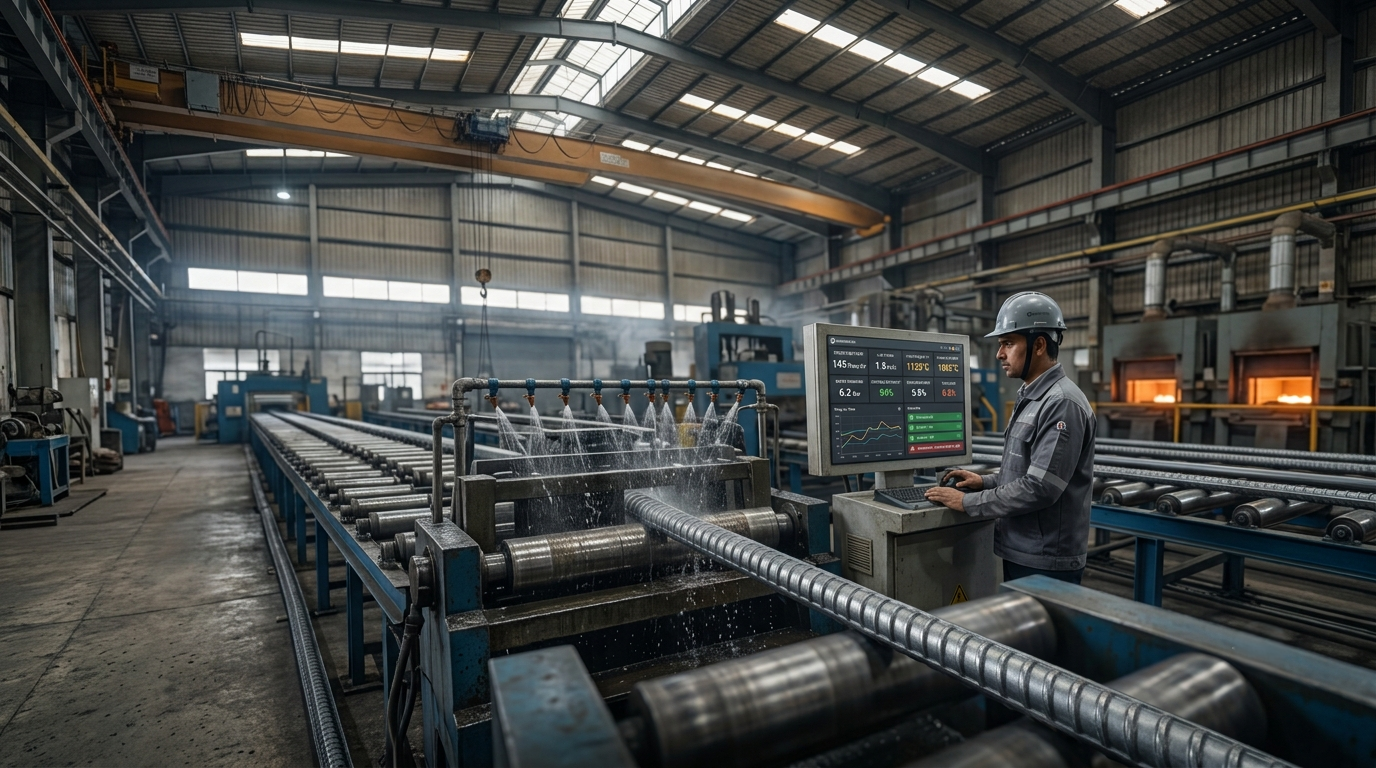
Advanced TMT steel bars are produced by following a specific manufacturing procedure where the steel bar is subjected to quenching under controlled conditions, forming an outer shell, the
martensite layer, along with a ductile core. Besides providing additional strength and elasticity, this formation also eliminates the minute pores in the steel, which might otherwise enable the
entry of water.
While there are many TMT steel bar manufacturers in Kerala, the best TMT steel bars are made by adding alloy metals such as copper, chromium, and phosphorus in specific amounts. The addition of alloy metals causes the formation of a layer of oxide on the surface of the steel, which acts as a barrier against corrosion reactions, making the bar more resistant to corrosion.
What to Look For When Buying TMT Bars in Kerala
The selection of appropriate TMT steel bars for your Kerala house depends on some particular criteria. Firstly, it is vital to ensure the presence of a certificate issued by the Bureau of Indian Standards (BIS). Moreover, one should verify ISO certifications concerning quality management and environmental sustainability.
The leading TMT steel bar manufacturer in Kerala, Kalliyath, provides not only relevant certificates but also has some distinctive characteristics of production. Being the only TMT steel producer in India that uses only renewable energy sources, Kalliyath manufactures steel without iron ore mined from the earth. This process leads to the creation of steel with fewer impurities. Less impurity results in denser and more uniform steel, which increases corrosion resistance.
Finally, one may consider choosing steel bars with better grades, such as Fe 550D. Besides providing excellent tensile strength, the steel bar of this grade also ensures better ductility. The letter “D” at the end of the name signifies ductility, meaning that the steel can deform without breaking under pressure.
Epoxy-Coated Rebars: An Extra Layer of Protection
In case of highly corrosive environments, such as coastal foundation work, basement floor work and retaining walls adjacent to water sources, epoxy-coated rebars can be used as another protective measure. The rebar is basically a TMT bar, which is then provided with a coating of fusion-bonded epoxy.
Kalliyath’s FBE rebars can prove to be very effective in such harsh environmental conditions. Such rebars are highly suitable for use in Kerala’s coastal area construction works and bridges. In combination with properly graded concrete and appropriate cover depths, FBE rebars can greatly enhance the longevity of a building or structure.
Sustainable Steel and Why It Matters for Quality
In terms of steel quality, there is an undeniable relationship between sustainable production and high-quality end products that many tend to overlook. Steel produced from scrap using electric arc furnaces instead of mined iron ore tends to have fewer slag inclusions and a more homogeneous microstructure, which makes the material more reliable when it comes to mechanical properties, such as its corrosion resistance.
It is for this reason that environmentally friendly TMT steel bars manufacturers in Kerala are not just doing the right thing for the environment; they are producing a superior product. With well-managed inputs and processes, the outcome is steel that delivers consistent performance even under challenging environments, as present in most parts of Kerala.
Frequently Asked Questions (FAQ)
Yes, especially when using Fe 550D grade bars or epoxy-coated FBE rebars. For coastal zones, combining corrosion-resistant steel with higher concrete cover and dense, low-permeability concrete mix is the recommended approach.
Fe 550D is the preferred grade for residential construction in Kerala. It combines high yield strength with superior ductility, making it suitable for both seismic conditions and the high-humidity, monsoon-heavy climate of the state.
Look for the ISI mark, check for consistent rib patterns on the bar surface, and verify the manufacturer’s BIS and ISO certifications. Best TMT steel bars manufacturers in Kerala will provide mill test certificates with each batch, showing chemical composition and mechanical properties.
Yes, and in many cases better. Steel produced through scrap-based electric arc furnace processes tends to have fewer impurities and a more uniform grain structure, which improves both strength and corrosion resistance. Sustainable tmt steel bars are not a compromise — they are a quality upgrade.
Conclusion
While corrosion could weaken a structure over time, it is important to select quality TMT bars to avoid such problems. Some of the best manufacturers include Kalliyath TMT, who produce certified and durable TMT bars. This will not only help improve your building, but also add longevity to it.
Recent Blogs
The Weak Link Nobody Checks: Why Your Binding Wire Matters
Read Now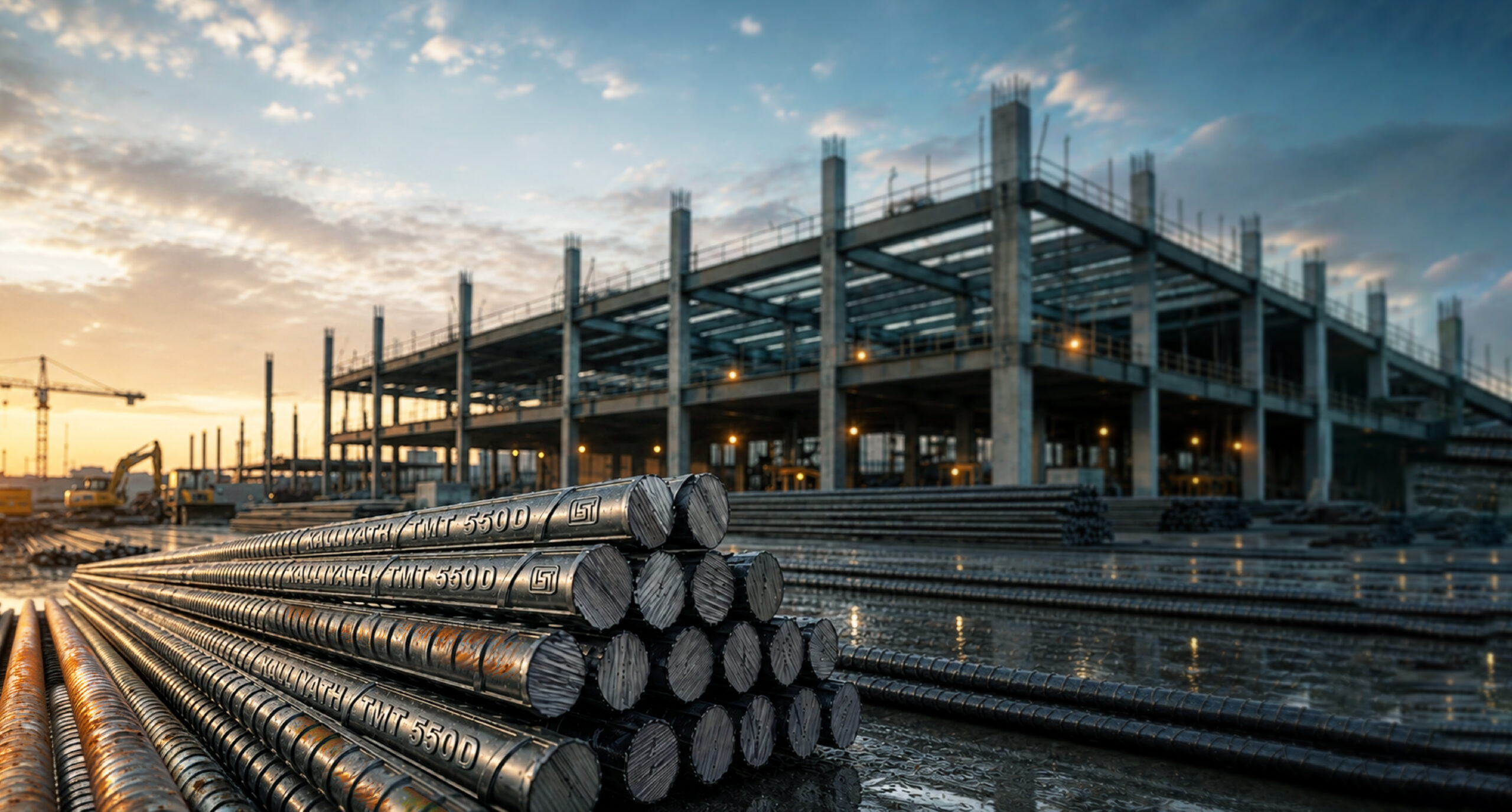
How Kalliyath Achieves 100% Sustainable Production
Read Now
Steel Without Mining: A Revolution in Sustainable Steelmaking
Read Now
What Are the Top Steel Industry Trends in 2026?
Read Now